Wednesday, 15 May 2013

Autumn Discovery 2013

 Autumn is a great time of year to get children thinking about the seasons and how each season is different from the others. Autumn brings with it colder weather, but beautiful Autumn leaves. Today we spent the morning thinking about and discovering about Autumn. 

During the week we have been 'leaf hunting' and collecting leaves to put aside for today's Discovery session.

 We created leaf rubbings with some of the leaves we collected.

 We used some of the large leaves to make leaf boats (and several leaf submarines). 

 We cut paper leaves and made miniature leaf books. This book has some sight words carefully recorded. Some children wrote the names of their friends or family members.

 We traced, cut, and finger painted Autumn trees.

 This is my favourite photo of today's session, these boys were working together to complete the activity.

At the start of each Discovery session we talk about being kind, sharing, and what we can do to be helpful, because some things are tricky for people to do own their own. These boys spent at least 20 minutes making an Autumn hand-print tree, every step was done together, including showing me the finished piece of art. I'm not sure what they were more pleased with - the artwork or the fact that they made it together.

 We also got out the wooden construction table to enjoy in the Autumn sunshine. Our school principal came over especially to teach some of our budding builders how to saw and hammer without losing a limb!
 
 Lots of beautiful apples are ready to eat in Autumn so we made apple prints with 1/2 an apple and a small green leaf.

But one very popular activity was using two different special apple cutting machines - 

 And eating the apples!

 This machine peeled, cored, and cut the apple. The children (and adults) were fascinated.


Yum!


Tuesday, 14 May 2013

Making Juice

As part of our inquiry learning unit we have been looking at 'brainfood'. 

 We found out that we need to eat a variety of food to give us energy, and fruit and vegetables are full of energy and nutrients.

Today I brought in apples, oranges, pears, green and gold kiwifruit, carrots, celery, and pineapple, and we experimented making and tasting different flavours of juice. The children were fascinated to see how carrots and celery can make juice too. Thanks to my marvelous teacher aide who brought in her juicer and a little ginger root!

I encouraged the children to try each juice, even if it was only a sip.

Some of our juice recipes included:
Fruit Salad
1 green kiwifruit, 1 apple, 1 pear, 1 orange, 2 gold kiwifruit, 1/4 whole pineapple - this was an overwhelming favourite.

Goody Gumdrops
1/4 whole pineapple, 2 oranges, 2 green kiwifruit, (you can also add strawberries to this recipe)

Sunshine O
4 carrots, 3 oranges, 1/4 teaspoon fresh ginger

Super Vege
2 apples, 3 oranges, 2 sticks celery


Thursday, 9 May 2013

How to Draw a Worm

 Have you ever wanted to know how to draw a worm?

Well, look here ....

Before 9 o'clock this morning one of my clever children drew one extremely long worm and one tiny baby worm. He then decided to make instructions to share with the class about how we could draw our own worms. 

Together at maths time we all came up with some words that describe the length and size of his worms.

I love how he numbered each step in his instructions, you can't see it in the photo but step 5 is about drawing on a little smiley face!


Wednesday, 8 May 2013

Mother's Day 2013

With a very special day coming up this weekend we spent our first Discovery session of Term 2 discovering about our mums, what mums love, and how to show our mothers that we love them. 

Here are a few of the activities we enjoyed:

 Mums love flowers, so we made these simple hand-print lilies with white paper and pipe-cleaners. 

Cutting activities for Discovery encourage the children to use scissors to cut meaningfully. Knowing where your thumb and fingers go when holding scissors, how to open and close them, and how to hold what you are cutting in your other hand is something that seems to come automatically to adults, but may need to be explicitly taught and modelled to children. 
Your child can cut strips of paper into squares, cut along straight and wavy lines,or cut around shapes and pictures. They can cut paper, card, ribbon, or pieces of material. Using scissors that are the correct size for makes it all a little bit easier too and are worthwhile to purchase. Left-handed children may prefer left-handed scissors, or they may develop a technique that allows for right-handed scissors.


 To show that we love our mum, we screwed up small pieces of tissue and made a colourful heart collage.

 Mums love clothes (well my mum does), so we made paper dolls and dressed them in dresses using different patterned material. I love the happy faces and hair on the mothers in the second picture.

 Mums love jewellery, so we made beautiful flower bracelets, this bracelet is being modelled by the mother of one of our mountaineers. 

 One Mother's Day you can give a card to your mother, so we wrote cards to our mums.


Happy Mother's Day!

 Have a look at what we did this time last year for Mother's Day.


Wednesday, 17 April 2013

ANZAC Day Discovery

Quilt by Brenda McPartlin.
Mrs McP is one of our very talented junior school teachers, she shared her stunning poppy quilt with us today.

 At the start of Discovery today we were lucky enough to have a parent who is in the army come to talk to us about his job and ....

.... teach us to march.

Then we ....


.... made New Zealand flags ....

.... stamped poppies with our fingers ....

.... played with these very special toy soldiers and army vehicles ....

 
.... built tanks out of old boxes ....


.... made medals out of silver foil and cardboard ....

 .... and started to make a beautiful poppy wreath to take to the ANZAC Day parade in Upper Hutt.

Check out the ANZAC Day wreaths we made last year with our senior school buddies.

ANZAC Day and the meaning behind it can be hard to explain to children. We discussed how it is a special day to remember New Zealand and Australia soldiers who died in a battle at Gallipoli during the First World War.


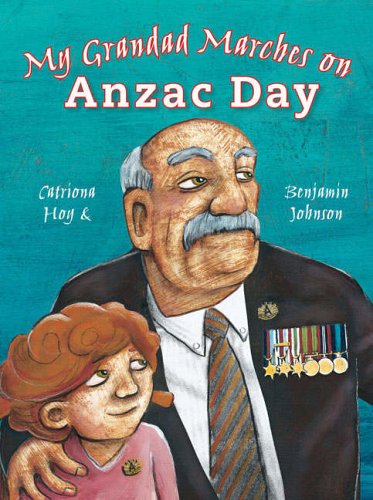
We looked at this book 'My Grandad Marches on ANZAC Day.'

This website talks in more detail about ANZAC Day, Gallipoli and their significance.


Sunday, 14 April 2013

Spinning Art

Look at the amazing spinning art hanging in our window.

 We used black paper, white paint, and generous amounts of glitter.

We used the same spinning machines used in this post for our spinning art.


Wednesday, 10 April 2013

Rolling Along

We were TP (Totara Park) Kids during Discovery today. 

Our 'Wheels' Discovery session provided lots of opportunities to practise cooperation and perseverance. They attempted to take turns and share, and try and try again if something was difficult. 

Some of the activities that promoted cooperation included:

Riding trikes, bikes, and scooters. 
These children are filling the trike with petrol and fixing the tires. 

Playing with matchbox cars and the road mats.

Sharing the Duplo vehicles. 
I often heard children negotiating to have a turn with the different vehicles. In my class I like to model with the children what words they can use to ask for a turn, that way they know exactly what they need to say when asking and answering.

 Counting and ordering these cars from Sparklebox to 20.

Filling out these car repairs form from Sparklebox
We also turned the playhouse inside J-Block into a Mechanics Garage - just the place to take your vehicle to be fixed.

 Watching the cars roll down the zig-zag race track.

Building with mobilo.

 Completing these stunning spinning artworks.  

 We only had two spinning machines (borrowed from our local kindy) and I observed many children sitting and waiting patiently for their turn, or coming back later in the session when a spinning wheel was available.


Activities that supported the children to persevere included:

Traffic light collage. 
I cut the paper into strips and the children had to rip, then glue the paper onto the correct circle to complete their traffic light.

 Finishing a colour wheel. 
The children were encouraged to complete this Newton Spinning Colour Wheel, then spin it on string or around a pencil to discover what happens to the colours. 

If you can spin it fast enough, like magic the colours should turn to white.

Making a box-car. (This was one of my favourites!)
While you don't need a lot of materials for making a box car, it takes several steps and a bit of time to complete.